
Introduction
Fire safety is a fundamental responsibility for businesses operating in the UK. Whether you manage an office, warehouse, retail premises, industrial facility or commercial building, understanding the applicable fire safety legislation is essential to protecting employees, visitors and other people who may be affected by a fire.
In England, the primary legislation governing fire safety in most workplaces and other non-domestic premises is the Regulatory Reform (Fire Safety) Order 2005. It establishes legal responsibilities for those who control premises, including employers, owners, landlords and facilities managers.
Businesses must identify fire risks, implement appropriate precautions, maintain relevant safety arrangements and ensure people understand what to do in an emergency.
This guide explains the key requirements, the responsibilities of business owners and practical steps organisations can take to improve workplace fire safety.
This article provides general information, not legal advice. The requirements applicable to a particular building depend on its use, circumstances and relevant legislation.
1. What legislation governs workplace fire safety in England?
The Regulatory Reform (Fire Safety) Order 2005 is the principal fire safety legislation for most non-domestic premises in England and Wales.
It covers workplaces, commercial premises, premises to which the public have access and the common parts of buildings containing multiple domestic premises.
The legislation places duties on the person responsible for fire safety to take appropriate precautions to protect people from fire risks.
Other legislation may also apply depending on the building and circumstances. For example, the Fire Safety Act 2021 clarified the application of the Fire Safety Order to certain features of residential buildings, while the Fire Safety (England) Regulations 2022 introduced additional requirements for specified residential buildings.
Businesses should therefore identify the legislation relevant to their premises rather than assume that one set of requirements applies to every building.
Official reference: Regulatory Reform (Fire Safety) Order 2005 — legislation.gov.uk
Further guidance is available in the government’s fire safety guidance for people with legal duties.
2. Who is responsible for workplace fire safety?
Under the Fire Safety Order, the person with legal responsibility is known as the responsible person.
Depending on the circumstances, this may be:
- An employer operating from commercial premises.
- A business owner or occupier.
- A landlord or another person responsible for the premises.
- A facilities manager, building manager or managing agent who has relevant control.
More than one responsible person may have duties within the same building. Where responsibilities overlap, they must cooperate and coordinate their fire safety arrangements.
For example, a business occupying part of a shared commercial building may be responsible for fire safety within its workplace, while the landlord or managing agent may have responsibility for shared areas within their control.
The exact allocation of duties depends on the premises and the extent of each person’s control.
The responsible person must ensure that appropriate arrangements are in place to assess risks, protect people and maintain fire safety precautions.
Official reference: GOV.UK — Fire safety in the workplace: Who’s responsible
3. Why is a fire risk assessment essential?
A fire risk assessment is a central part of workplace fire safety management.
The responsible person must ensure that a suitable and sufficient assessment is carried out and reviewed regularly. The assessment identifies potential fire hazards, considers who could be harmed and determines the precautions needed to reduce risks.
A practical assessment should consider the following five steps.
Step 1: Identify fire hazards
Look for anything that could cause a fire to start or contribute to its spread.
Examples include:
- Faulty electrical equipment and damaged wiring.
- Heating equipment and other ignition sources.
- Flammable liquids, gases or chemicals.
- Combustible packaging, waste and stored materials.
- Activities that generate heat, sparks or naked flames.
Step 2: Identify people at risk
Consider everyone who could be affected by a fire, including employees, customers, contractors, visitors and members of the public.
Pay particular attention to people who may need assistance to evacuate, including individuals with disabilities or mobility difficulties.
Step 3: Evaluate and reduce the risks
Assess the likelihood of a fire occurring and the potential consequences.
Depending on the findings, precautions might include safer storage arrangements, suitable fire detection and warning systems, appropriate firefighting equipment and clear escape routes.
The measures required should reflect the risks identified and the characteristics of the premises.
Step 4: Record findings and prepare an emergency plan
Document the assessment, identify necessary improvements and establish procedures for responding to a fire.
Employees should understand how to raise the alarm, evacuate safely and follow the site’s emergency arrangements.
Step 5: Review and update the assessment
A fire risk assessment should not simply be completed and forgotten.
Review it regularly and when there are significant changes that could affect fire safety, such as alterations to the building, changes in occupancy, new equipment or changes to work activities.
The responsible person must keep a written record of the assessment.
If specialist knowledge is needed, a competent fire risk assessor can provide assistance. The responsible person remains accountable for ensuring that the necessary duties are fulfilled.
Official reference: GOV.UK — Fire risk assessments
4. What fire safety measures must businesses have in place?
There is no single checklist that applies identically to every workplace. The precautions required depend on the fire risk assessment, the premises and the activities taking place.
However, businesses should consider the following areas.
Fire detection and alarm systems
Appropriate arrangements must be in place to detect fire and warn people where necessary.
The type of system required depends on factors such as the size and layout of the building, the people using it and the risks identified.
Any required equipment should be maintained in suitable working order.
Emergency exits and escape routes
People must be able to evacuate safely in an emergency.
Businesses should ensure that escape routes remain available, doors can be opened as required and emergency exits are not obstructed by stock, furniture or equipment.
Emergency arrangements should take account of people who may require additional assistance.
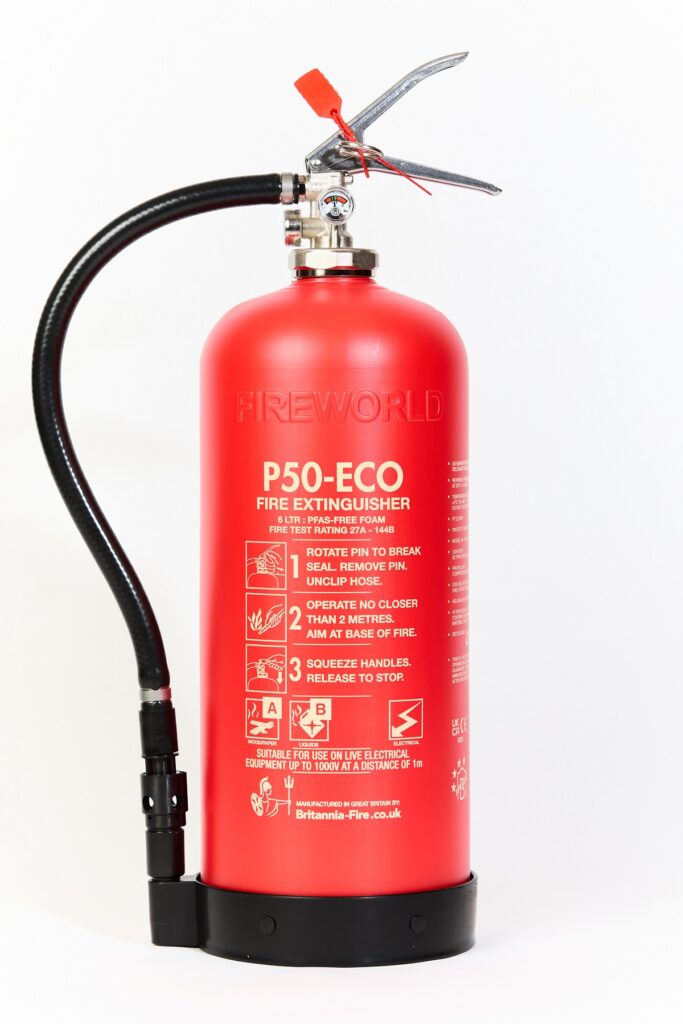
Firefighting equipment
Suitable firefighting equipment should be provided where required by the assessment.
Its selection, positioning and maintenance should reflect the risks present. Staff should understand the relevant procedures and must not be expected to tackle a fire where doing so would put them in danger.
Fire safety signs and emergency lighting
Appropriate signs and emergency lighting may be necessary to help people identify escape routes and leave the premises safely.
The need for these measures should be assessed in the context of the building and its evacuation arrangements.
Safe storage and housekeeping
Good housekeeping can help reduce avoidable fire risks.
Businesses should manage combustible waste, store flammable materials appropriately, maintain equipment and address hazards identified during inspections.
Official reference: GOV.UK — Fire safety guidance for those with legal duties
5. Fire safety training and employee responsibilities
Fire safety arrangements are only effective when employees understand what they need to do.
The responsible person must provide appropriate fire safety information, instruction and training to employees. This should take account of the risks identified and the arrangements established for the premises.
Training and instruction should explain:
- How to raise the alarm and report a fire.
- The location of relevant escape routes and exits.
- The evacuation procedure and assembly arrangements.
- Any specific duties assigned to designated staff.
- The importance of reporting hazards, damaged equipment and blocked exits.
Employees also have responsibilities under the Fire Safety Order. They must take reasonable care for their own safety and that of others, cooperate with their employer and report relevant serious dangers or shortcomings in protective arrangements.
Refresher instruction and evacuation practice should be appropriate to the premises, risks and emergency plan.
Official reference: GOV.UK — Fire safety in the workplace
6. Fire alarm maintenance and routine checks
Installing fire safety equipment is not enough. Where equipment and precautions are required, suitable arrangements must be in place to maintain them.
Businesses should establish a maintenance programme appropriate to their systems and legal duties. This may include:
- Routine checks of escape routes and fire doors.
- Testing and servicing fire detection and alarm systems.
- Checking emergency lighting where provided.
- Inspecting relevant firefighting equipment.
- Recording faults, maintenance activities and corrective actions.
The required frequency and method of testing will depend on the equipment, applicable standards, manufacturer’s instructions and the premises’ arrangements.
For example, businesses should not assume that every fire alarm system has exactly the same testing requirements. They should follow the applicable guidance and competent technical advice for their system.
If a fault is identified, the responsible person should assess the implications for safety and arrange appropriate corrective action and interim precautions where necessary.
Official reference: GOV.UK — Fire safety risk assessment: Offices and shops
7. What happens if a business fails to comply?
Fire safety enforcement authorities can investigate premises and take action where legal requirements are not met.
Depending on the circumstances, this may include:
- Requiring improvements through formal enforcement notices.
- Restricting the use of premises where serious fire risks warrant it.
- Prosecution for relevant offences.
- Financial penalties or imprisonment where provided for by law.
The consequences depend on the nature and seriousness of the breach and the applicable legal provisions.
Businesses should not wait for an inspection before addressing known fire safety problems. Maintaining suitable assessments, records, equipment and emergency procedures helps demonstrate that fire safety is being actively managed.
Official reference: Regulatory Reform (Fire Safety) Order 2005
8. How can businesses improve their fire safety arrangements?
A practical starting point is to review existing arrangements against the risks identified for the premises.
Business owners and facilities managers can:
- Confirm who the responsible person is and clarify responsibilities.
- Ensure the fire risk assessment is suitable, documented and up to date.
- Check that identified actions have been completed or are being addressed.
- Review alarm systems, escape routes, fire doors and other relevant precautions.
- Ensure employees receive appropriate fire safety information and training.
- Maintain records of inspections, tests, maintenance and corrective action.
- Review arrangements following relevant changes to the building, its occupancy or its activities.
Where there is uncertainty about a legal duty or a technical requirement, seek advice from an appropriately competent professional or the relevant fire and rescue authority.
A risk assessment should guide decisions about what is necessary rather than relying on a generic checklist alone.
9. How Adelar can support workplace fire safety
Effective fire safety management requires suitable planning, appropriate precautions and ongoing attention to the condition of a building.
Adelar Facilities Management Ltd supports organisations seeking professional facilities and safety-related services. Businesses looking for assistance should identify their specific requirements and confirm which services are available and appropriate for their premises.
Depending on the services offered, professional support may help organisations review their existing arrangements, identify areas requiring attention and plan appropriate next steps.
It is important to distinguish between providing a service and fulfilling a legal duty: appointing a contractor does not automatically transfer all the responsible person’s obligations or guarantee compliance.
To discuss your premises and requirements, visit Adelar Facilities Management Ltd and contact the team.